Artificial intelligence is rapidly becoming part of everyday healthcare operations. From clinical decision support systems to administrative automation, AI tools are already influencing how clinicians diagnose conditions, manage patient data, and streamline workflows.
For clinicians, healthcare administrators, and allied health professionals, this shift raises an important question: how do you stay relevant in a healthcare system increasingly supported by intelligent technologies?
Understanding AI is no longer just an advantage. It is becoming an essential capability for professionals who want to remain effective and competitive in modern healthcare environments.
An AI certification can help bridge the gap between traditional clinical expertise and emerging digital healthcare systems.
What’s Happening with AI in Healthcare Today
AI adoption in healthcare is accelerating across both clinical and administrative functions.
Recent industry reports indicate that a growing number of physicians are already using AI-powered tools in their daily workflows. These tools assist with tasks such as medical imaging analysis, predictive patient monitoring, and clinical documentation.
At the same time, the global AI in healthcare market continues to expand rapidly as hospitals and healthcare organizations invest in technologies that improve efficiency, reduce administrative burden, and support better clinical outcomes.
AI is now being integrated into several areas of healthcare, including:
- Clinical decision support systems
- Diagnostic imaging tools
- Predictive patient monitoring
- Electronic health record (EHR) automation
- Revenue cycle management
- Population health analytics
For healthcare professionals, this means AI is not a distant innovation. It is already part of the systems and tools used in everyday practice.
Why AI Knowledge Matters for Healthcare Professionals
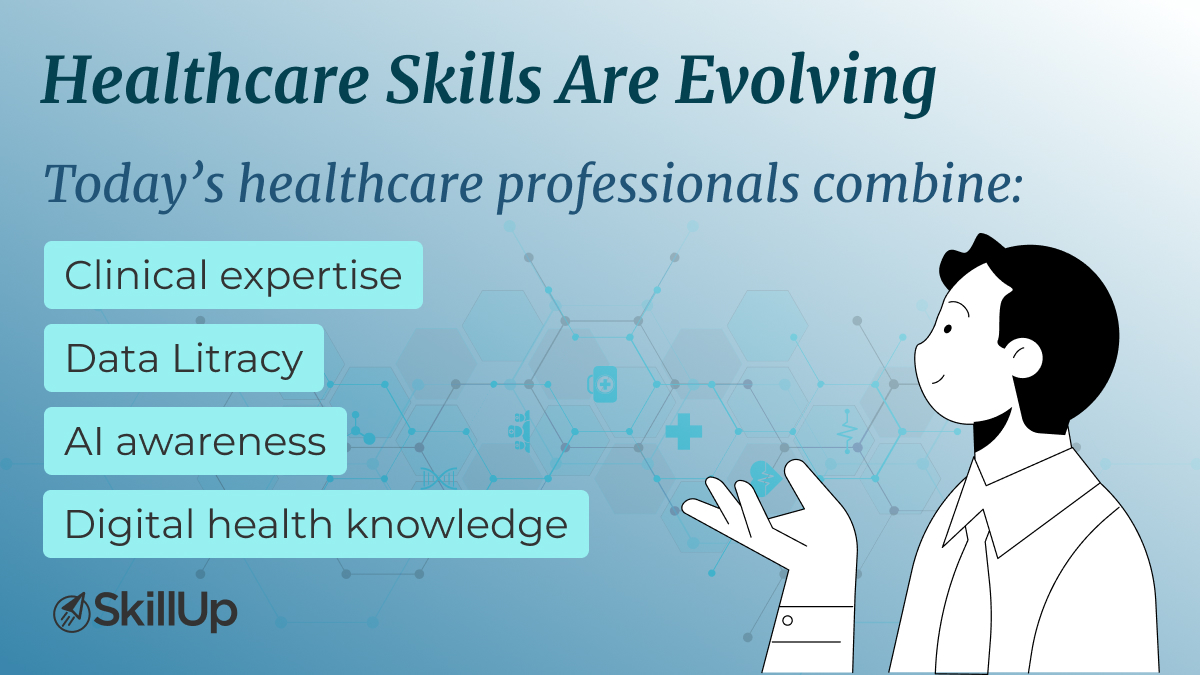
Healthcare careers are not disappearing, but the nature of healthcare work is evolving.
AI systems can automate repetitive administrative tasks, analyze large datasets, and provide decision-support insights. However, these technologies still depend on human expertise for interpretation, ethical oversight, and patient-centered care.
Professionals who understand how AI works are better equipped to collaborate with these systems and use them effectively.
Developing AI literacy can help healthcare professionals:
- Interpret clinical data more efficiently
- Improve diagnostic accuracy with AI-assisted tools
- Support personalized treatment planning
- Collaborate with multidisciplinary digital health teams
- Participate in technology-driven healthcare initiatives
Rather than replacing clinicians, AI is reshaping how healthcare professionals work and how clinical decisions are supported.
How AI Certification Strengthens Your Career
As AI becomes more integrated into healthcare systems, professionals across clinical and administrative roles are expected to understand how these technologies function and how they affect patient care.
An AI certification provides structured knowledge that helps professionals move beyond general awareness and develop practical understanding.
1. Greater Clinical Confidence
AI tools can generate insights and recommendations, but clinicians remain responsible for making final decisions.
Training in AI helps healthcare professionals evaluate algorithm outputs, understand limitations, and apply technology responsibly in clinical contexts. This strengthens clinical judgment while improving patient safety and care quality.
2. Stronger Career Opportunities
Healthcare organizations increasingly value professionals who can work confidently with emerging technologies.
An AI certification demonstrates that you understand how AI systems operate, how they integrate with healthcare infrastructure, and how they can support better outcomes.
This capability can strengthen your professional profile and open opportunities in areas such as:
- Digital health programs
- Clinical informatics
- Healthcare technology implementation
- Data-driven care initiatives
3. Improved Workflow Efficiency
One of the biggest advantages of AI in healthcare is its ability to reduce administrative workload.
- AI-enabled systems can support:
- Clinical documentation automation
- Appointment scheduling optimization
- Predictive resource planning
- Data analysis for population health management
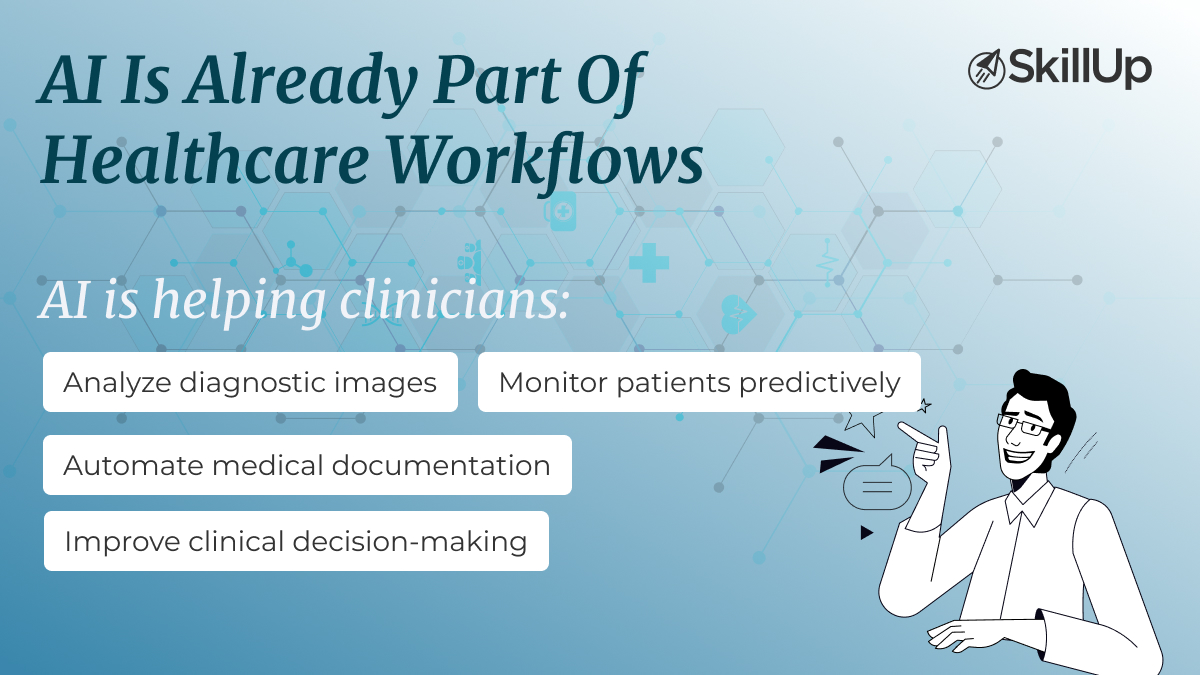
Understanding how to use these tools effectively can help healthcare professionals reduce time spent on administrative tasks and focus more on patient care.
4. Opportunities for Leadership in Digital Health
Healthcare organizations need professionals who can connect clinical expertise with emerging technologies.
AI training provides foundational knowledge in areas such as data governance, implementation frameworks, and ethical AI use. These skills position professionals to contribute to digital transformation initiatives and technology adoption strategies.
As healthcare systems modernize, professionals who understand both medicine and technology are increasingly valuable.
Will AI Replace Healthcare Jobs?
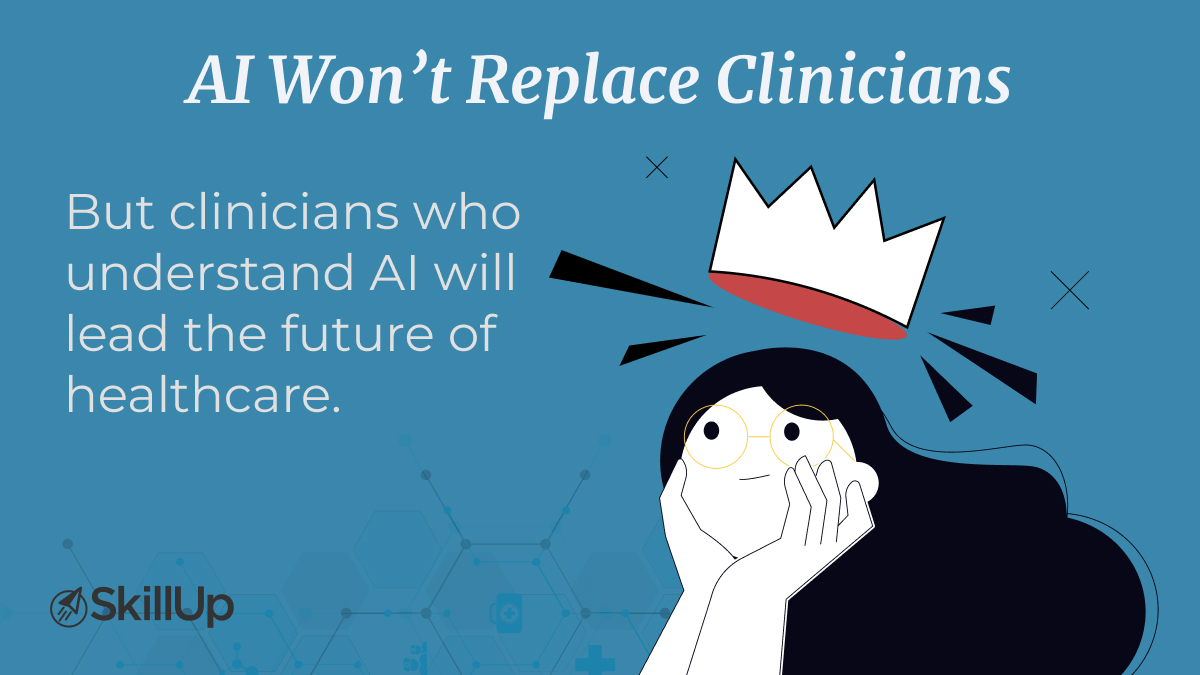
Fair question and one that gets thrown around a lot! AI may automate certain tasks, but it creates new roles at the same time:
- Clinical AI specialist roles
- Data integration leads
- Digital health strategy managers
- Predictive analytics consultants
In fact, a report predicts that AI adoption in healthcare will create millions of new jobs and tech roles by 2028; especially in digital diagnostics, data science, and clinical technology support systems.
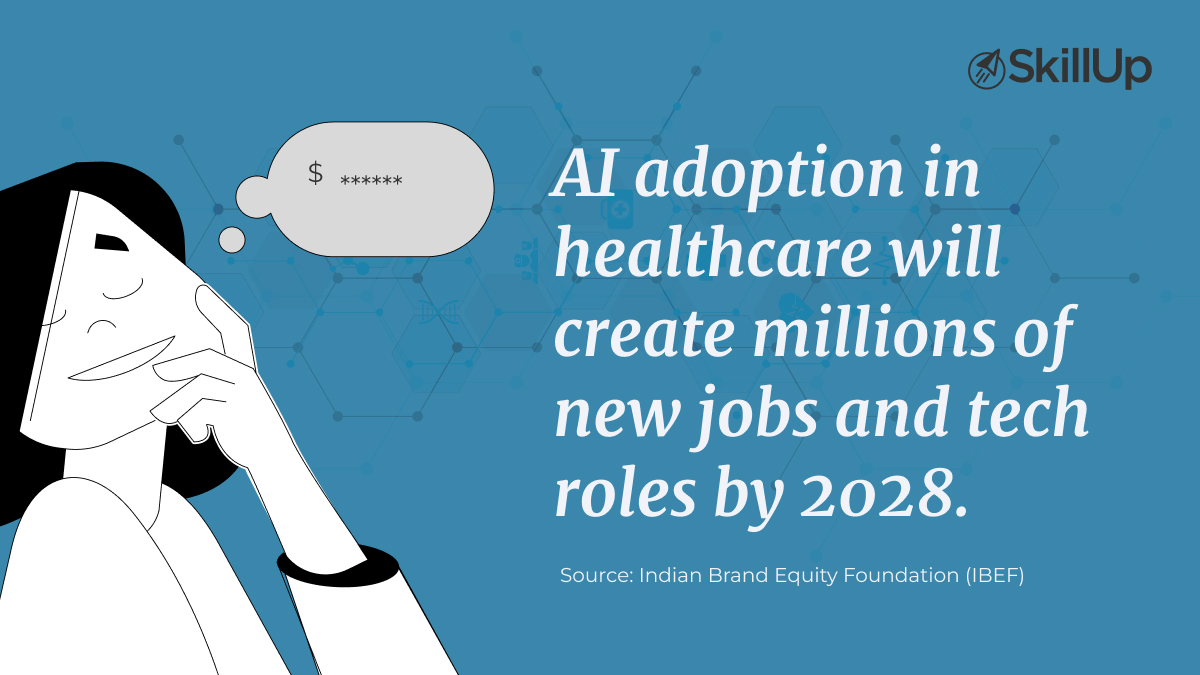
So, AI is not a threat; it is a shift from task-based work to skill-based work. And those with certified expertise are the ones who benefit most.
The Immediate Value of AI Training
AI education is not only about preparing for the future. It also provides immediate value in today’s healthcare environments.
Professionals trained in AI can better understand how intelligent systems analyze patient data, generate insights, and support clinical workflows.
This knowledge helps you:
- Understand how AI interprets patient data
- Use tools that reduce cognitive load and burnout
- Make evidence-based decisions with tech support
- Work smarter and not harder
As healthcare organizations continue adopting technology-driven systems, these skills are becoming increasingly important.
AI Certification for Healthcare Professionals
The TechMaster Certificate Program in AI for Healthcare from SkillUp Online is designed specifically for clinicians, healthcare administrators, and allied health professionals who want practical knowledge of how AI is used in modern healthcare systems.
The program focuses on real-world applications, including:
- AI in clinical decision support
- Healthcare data analysis
- Ethical and responsible AI use
- AI integration into healthcare workflows
Through structured modules and expert-led learning, professionals can build a strong understanding of how AI technologies are shaping healthcare delivery.
Moving Forward in an AI-Enabled Healthcare System
Healthcare professionals who thrive in the coming years will not be those who simply use AI tools. They will be those who understand how these tools work and how to apply them responsibly in patient care and healthcare operations.
Developing AI knowledge today can help you stay effective, adaptable, and prepared for the future of medicine.
If you would like to know more about how you can build skills and get started, contact our Learner Support Team at [email protected]. They will be more than happy to guide you on the next steps you can take.

SkillUp Online